
Not sure where to start?
It doesn't have to be 'epic'
It doesn't have to involve a ridiculous number of miles
It doesn't need to involve lots of money either
Create your own adventures, that work for you, your time, your family, lifestyle and budget
It doesn't have to involve a ridiculous number of miles
It doesn't need to involve lots of money either
Create your own adventures, that work for you, your time, your family, lifestyle and budget

Wild Camping Gear & Pack Weight
|
Everyone's gear list will be different and as you start getting out, you'll find out what you need, what you don't need, and what luxury items you want to take out.
It's all a balancing act between pack weight and comfort at camp! The lists below are just a guide to get started - for detailed gear lists from my own wild camps with brands and shopping links, check out My Wild Camps. Check out the Gear Shop for a list of lots of the gear that I use, complete with amazon shopping links. |
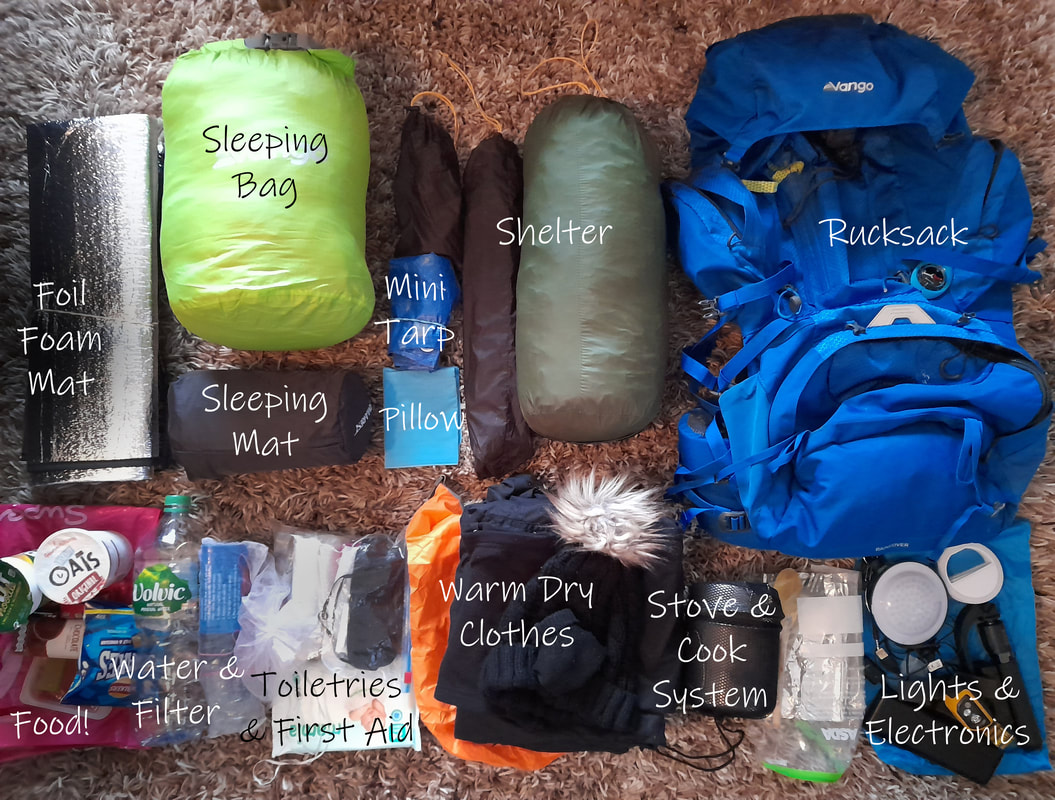
|
|
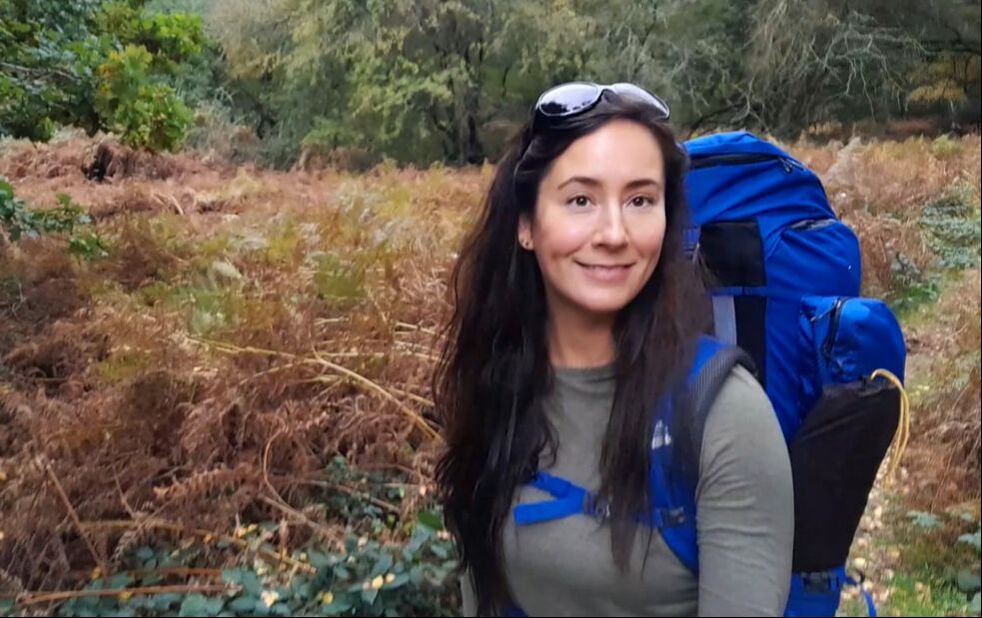
Pack Weight As a guide; your pack, complete with your gear, food & water, shouldn't weight any more than 20% of your body weight. My pack (of mostly non-expensive, heavy-ish, basic gear) currently weighs around 28-29lbs, which is 20% of my body weight and easy to carry. If I go over this I definitely find it unpleasant or injury-inducing. |
Wild Camping - ESSENTIAL ITEMS
A Rucksack
Big enough to take your gear, supportive enough that it's comfortable
A Shelter
Tent / tarp / hammock & tarp / bivvi bag
Sleep System:
Sleeping mat
Sleeping bag
Electronics:
Head torch
Hydration:
Water bottles or water bladder
Toiletries / Hygiene:
Loo roll
Hand Sanitiser
Travel toothpaste
Toothbrush (chop the handle off to reduce weight & size)
Clothing:
Dry set of clothes and socks for overnight
Med Kit:
Some sort of pain relief
Plasters
For Emergencies:
Phone
Bank card / cash
If you're heading far from civilisation:
Map & compass (with the knowledge of how to use it) / GPS
Food & Drink:
Whatever you want to take
Other:
Bag for rubbish
Bin bags or dry bags to keep your sleeping bag and dry clothes dry
Ziplock Bags - to keep electronics etc dry and keep things organised
Big enough to take your gear, supportive enough that it's comfortable
A Shelter
Tent / tarp / hammock & tarp / bivvi bag
Sleep System:
Sleeping mat
Sleeping bag
Electronics:
Head torch
Hydration:
Water bottles or water bladder
Toiletries / Hygiene:
Loo roll
Hand Sanitiser
Travel toothpaste
Toothbrush (chop the handle off to reduce weight & size)
Clothing:
Dry set of clothes and socks for overnight
Med Kit:
Some sort of pain relief
Plasters
For Emergencies:
Phone
Bank card / cash
If you're heading far from civilisation:
Map & compass (with the knowledge of how to use it) / GPS
Food & Drink:
Whatever you want to take
Other:
Bag for rubbish
Bin bags or dry bags to keep your sleeping bag and dry clothes dry
Ziplock Bags - to keep electronics etc dry and keep things organised
Wild Camping - OPTIONAL & LuxurY ITEMS
Sleeping:
Thin foil / foam mat to put under your sleeping mat (increases warmth and protects your mat)
Inflatable or lightweight pillow
Blackout eye mask
Ear plugs
Hydration:
Water filter
Cookware:
Hiking stove & gas canister
Cook Pot
Fork or spoon
Matches / Lighter / Flint & Steel (plus a backup is always a good idea)
Folding gas canister stand
Wind shield
Lightweight or collapsible mug or cup
Knife
Electronics:
A light to hang in your tent
Power bank
GPS navigation device
Toiletries / Hygiene:
Baby wipes
Talc
Toiletries in tiny travel pots
Tiny hand mirror
Hiking In:
Hiking / trekking poles
Other:
Small section of tarp for the tent vestibule
Hiking table
Hiking chair or stool
Camera gear
Microfibre cloth
Activities for time in the tent
Thin foil / foam mat to put under your sleeping mat (increases warmth and protects your mat)
Inflatable or lightweight pillow
Blackout eye mask
Ear plugs
Hydration:
Water filter
Cookware:
Hiking stove & gas canister
Cook Pot
Fork or spoon
Matches / Lighter / Flint & Steel (plus a backup is always a good idea)
Folding gas canister stand
Wind shield
Lightweight or collapsible mug or cup
Knife
Electronics:
A light to hang in your tent
Power bank
GPS navigation device
Toiletries / Hygiene:
Baby wipes
Talc
Toiletries in tiny travel pots
Tiny hand mirror
Hiking In:
Hiking / trekking poles
Other:
Small section of tarp for the tent vestibule
Hiking table
Hiking chair or stool
Camera gear
Microfibre cloth
Activities for time in the tent
WAYS TO REDUCE PACK WEIGHT
- Carry a water filter instead of lugging around multiple litres of water - just make sure you'll have access to water sources on your travels
- Pitch near a water source so that you don't have to carry it
- Use your jacket or fleece rolled up as a pillow
- Be creative - a foil food tray cut into a large rectangle makes a great wind shield for your stove, and weighs barely anything. Cut handles off toothbrushes etc
- Take dry or dehydrated food and re-hydrate at camp
- Be strict - only take what you actually need
Where To Pitch
Where you'll want to pitch will depend on many factors. Here's some things to consider...
Do you want to pitch on a hill with views, or sheltered in woodland (woodland is warmer and more discrete)
Do you need to pitch near water or can you carry it all in with you
Are you staying local, or wanting to explore further afield
How far are you willing to drive
How far are you willing to walk from your car to your pitch?
Do you want to pitch on a hill with views, or sheltered in woodland (woodland is warmer and more discrete)
Do you need to pitch near water or can you carry it all in with you
Are you staying local, or wanting to explore further afield
How far are you willing to drive
How far are you willing to walk from your car to your pitch?
Your First Wild Camp
|
Plan it out - consider visiting it beforehand or check out the local terrain on a map
Figure out where you'll need to park and how far you'll need to walk Don't go too far - close to your home or car is ideal for a first trip out Test your fully loaded pack before you head out - check that the weight is manageable and if not, make adjustments Test your gear out at home first and learn how it all works Have a plan in case things go wrong - a 'fail' isn't actually a fail, it's a valuable learning experience |
|
Wild Camping Etiquette
Wild camping is technically not permitted in England and Wales. However, this is a civil matter, not a legal one. Be respectful and discrete and you'll not have any issues. Here's some guidelines;
Get away from towns and cities if you can
Don't trespass
Don't pitch on farmland unless you have permission from the landowner
Plan your pitch beforehand
Be inconspicuous - choose natural colours for your shelter to blend in with the surroundings
Arrive late (just before sunset), pack up early (before or at dawn)
Don't have a fire
Don't damage or burn the ground or the surroundings and don't interfere with wildlife
Keep noise & light to a minimum
Don't camp in groups
Pitch away from footpaths
Take all rubbish home - goes without saying
Don't stay in one place for more than one night
Leave No Trace (LNT) - aside from some flattened grass, your pitch and surroundings should be left exactly as you found them
If you're asked to move on, do so politely - if you chose your locations carefully you are highly unlikely to be noticed or asked to move on (I never have been in over 6 years)
Get away from towns and cities if you can
Don't trespass
Don't pitch on farmland unless you have permission from the landowner
Plan your pitch beforehand
Be inconspicuous - choose natural colours for your shelter to blend in with the surroundings
Arrive late (just before sunset), pack up early (before or at dawn)
Don't have a fire
Don't damage or burn the ground or the surroundings and don't interfere with wildlife
Keep noise & light to a minimum
Don't camp in groups
Pitch away from footpaths
Take all rubbish home - goes without saying
Don't stay in one place for more than one night
Leave No Trace (LNT) - aside from some flattened grass, your pitch and surroundings should be left exactly as you found them
If you're asked to move on, do so politely - if you chose your locations carefully you are highly unlikely to be noticed or asked to move on (I never have been in over 6 years)
Woods or Hills
You'll probably find you're a woods camper or a hill camper. I started out as a woods camper; I like the warmth, the stillness, the trees, and I love hearing the animals doing their thing. I've evolved to love the mountains for their rugged unforgiving beauty
Woods |
Hills |
Discrete |
Visible |
Sheltered |
Exposed & Windy |
Warmer |
Colder |
Lots of animals & wildlife |
Less animals & wildlife |
Views of the forest |
Sunsets & sunrises, views to the horizon |
Wildlife noises & creaking trees |
Wind noises |
Winter Cold Weather Camping
Camping in winter conditions requires extra considerations, preparation, and better gear. While you can usually get by with more basic gear in spring, summer and autumn, these will rarely be suitable or safe for cold conditions.
Invest in a cold weather sleeping mat & sleeping bag - these cost more money, but there's no other way around it.
Keep your water filter and electronics in your sleeping bag with you overnight. A frozen water filter will be damaged and rendered useless. Electronics will drain their battery faster in the cold.
Consider taking a Nalgene-type bottle to use as a hot water bottle.
Eat before bed and don't let yourself get hungry - your body generates warmth as it digests food.
Generate heat by eating or moving about, and get in your sleeping bag when you already feel warm - it's easier to maintain a warm body temperature than to try to increase it if you're already cold.
Have an escape plan if things go wrong.
Don't risk hypothermia by staying put if you can't stay warm enough - pack up and get moving instead.
Invest in a cold weather sleeping mat & sleeping bag - these cost more money, but there's no other way around it.
Keep your water filter and electronics in your sleeping bag with you overnight. A frozen water filter will be damaged and rendered useless. Electronics will drain their battery faster in the cold.
Consider taking a Nalgene-type bottle to use as a hot water bottle.
Eat before bed and don't let yourself get hungry - your body generates warmth as it digests food.
Generate heat by eating or moving about, and get in your sleeping bag when you already feel warm - it's easier to maintain a warm body temperature than to try to increase it if you're already cold.
Have an escape plan if things go wrong.
Don't risk hypothermia by staying put if you can't stay warm enough - pack up and get moving instead.
I am not on TikTok - all TikTok profiles with my name are fakes. There are also many scammers pretending to be me on Facebook and YouTube. The links above are the official and only real WildBeare social media accounts
All Content Copyright © Claire | WildBeare